
Introduction
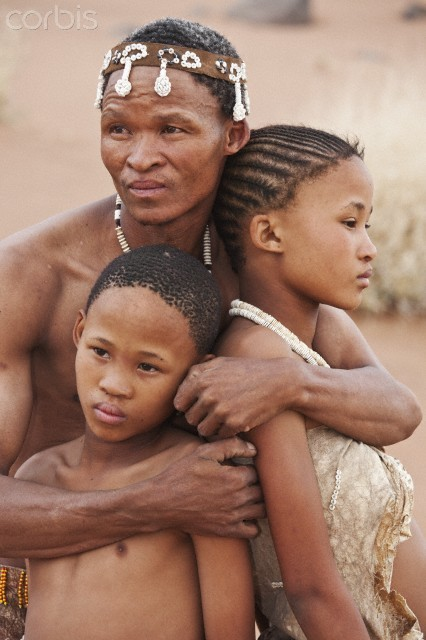
Before the rise of kingdoms, cities, and nations, there were the San People Africa’s first storytellers, hunters, and spiritual guides. With a legacy that stretches back over 20,000 years, the San are not just a tribe, they are the ancestral soul of Southern Africa. Their way of life, language, and deep connection to the earth offer a timeless lesson in simplicity, resilience, and reverence for nature.
Location
The San inhabit regions across Botswana, Namibia, Angola, South Africa, and Zimbabwe, with many living in the vast expanse of the Kalahari Desert. These remote, arid areas have preserved their traditions for centuries, shielding them from the fast pace of the modern world.
Demography
The San population is estimated at around 90,000 to 100,000 people, though only a small percentage still live traditionally. In Botswana alone, they account for about 50,000, many of whom have adapted to urban or agricultural life due to displacement and socio-political pressures.
Linguistic Affiliation
The San are known for speaking Khoisan languages, famous for their distinctive click sounds that fascinate linguists globally. Languages such as !Kung, Ju|’hoan, and Naro are part of this family, and are believed to be among the oldest spoken languages still in use today.
History and Cultural Relations
The San are considered direct descendants of Africa’s earliest inhabitants. Long before the migration of Bantu-speaking peoples or European colonists, the San thrived as hunter-gatherers. Though marginalized over centuries and subjected to land loss, they’ve managed to retain vital pieces of their rich cultural identity and oral history.
Settlements
San communities are semi-nomadic, forming temporary camps based on seasonal food and water availability. Their huts, built with grass, leaves, and branches, are both functional and easily movable, reflecting their deep respect for nature and the need to live lightly on the land.
Trade
Traditionally, the San bartered animal hides, beads, and herbal remedies with neighboring groups. Today, they increasingly participate in eco-tourism, art sales, and cultural demonstrations, using their ancient skills like tracking and storytelling to earn income and preserve heritage.
Marriage
Marriage among the San is based on mutual respect, often initiated by family arrangements. Bride service, where the groom serves the bride’s family, is a core tradition. While marriages are typically monogamous, San society allows for separation and remarriage, valuing harmony and cooperation in family life.
Religion
The San spiritual world is richly symbolic. They believe in a supreme being, //Kaggen, who appears as various animals, often the praying mantis.
Their most sacred ritual is the trance dance a powerful, communal ceremony used for healing, spiritual connection, and maintaining balance between the physical and spirit worlds.
Rock paintings found across Southern Africa serve as spiritual journals, recording visions, hunts, and divine encounters.
Uniqueness
What sets the San apart is their deep ecological knowledge and spiritual artistry. They are among the world’s oldest continuous cultures, with unparalleled skill in tracking wildlife, interpreting signs in nature, and surviving in harsh desert conditions.
Their click languages are linguistic treasures, and their rock art is a UNESCO-recognized archive of prehistoric life and belief.
The San view land not as property but as a living partner, making their philosophy one of the most sustainable on earth.
Every scar, painting, and dance step among the San holds meaning an unbroken chain linking past, present, and future in an intimate dance with nature.
Conclusion
The San People are not just an ethnic group; they are a living memory of Africa’s origin. Despite challenges of displacement and cultural erosion, their resilience continues to inspire. Their quiet, enduring way of life teaches us that there is strength in stillness, wealth in wisdom, and power in remembering where we come from.
In their footsteps lies the story of us all.

Leave a Reply