
Introduction
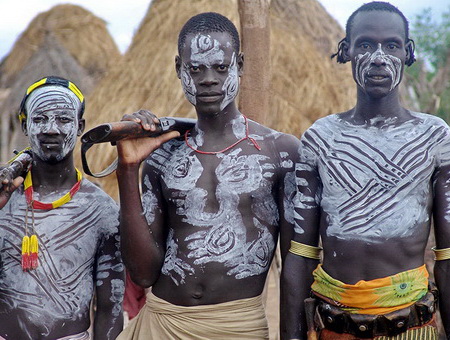
In the Omo Valley of southern Ethiopia lives a small but culturally vibrant group whose artistic expression speaks louder than words, the Karo Tribe. Known for their elaborate body painting, intricate scarification, and devotion to the Omo River, the Karo are one of Africa’s most visually captivating tribes. Despite their small population, their customs and creativity have gained international attention for their deep cultural meaning and stunning aesthetics.
Location
The Karo people live along the eastern banks of the Omo River in southern Ethiopia. This river is not only the lifeline of their agriculture and fishing but also central to their spiritual beliefs. Their main settlements include Dus, Korcho, and Labuk, small villages perched on cliffs overlooking the river valley.
Demography
The Karo are one of the smallest ethnic groups in Ethiopia, with a population estimated to be between 1,000 to 2,000 people. Their limited numbers make them highly vulnerable to outside influence and environmental threats, yet they maintain a strong grip on their traditions.
Linguistic Affiliation
The Karo speak the Karo language, a South Omotic language closely related to Hamer and Banna neighboring tribes in the Omo Valley. While many Karo also understand these related languages, Karo remains the main spoken dialect within their community.
History and Cultural Relations
The Karo are believed to have settled along the Omo River generations ago after separating from larger Omotic-speaking groups like the Hamer. They share many cultural elements including body painting and ceremonial practices with their neighbors but have developed their own unique style, especially in the art of body decoration and scarification. Despite contact with outsiders, the Karo have preserved their way of life, in part due to their remote location.
Settlements
Karo settlements are small and organized around extended families. The village huts are built with wood, thatch, and mud, arranged in loose clusters. Each village has a communal space for rituals and dances, and because of their cliffside locations, they enjoy natural protection and scenic views of the river valley. Their proximity to the Omo River enables agriculture, fishing, and ceremonial water usage.
Trade
Traditionally, the Karo engaged in barter trade with neighboring tribes like the Hamer, Banna, and Nyangatom. They exchange goods such as grains, animal hides, jewelry, and pottery. Today, tourism plays a growing role visitors are drawn to their body art and traditional ceremonies, and many Karo sell handmade items or charge for photographs to generate income.
Marriage
Marriage among the Karo is endogamous, often arranged within the tribe or with closely related neighboring groups. Bridewealth is paid in livestock, particularly goats or cattle. Men are typically polygamous if they can afford it. Women gain social standing through marriage and childbearing, while ceremonial dances and festivals play a role in courtship and bonding. Fertility and family lineage are highly valued in Karo culture.
Religion
The Karo practice traditional animist religion, deeply connected to nature and ancestral spirits. The Omo River holds spiritual significance and is often the site of cleansing and fertility rituals. They believe in a creator god but interact more regularly with spiritual intermediaries and ancestors through rituals, sacrifices, and blessings. Ceremonial scarification, body painting, and dance are all forms of spiritual expression.
Conclusion
Though small in number, the Karo Tribe are giants in cultural richness, artistic creativity, and spiritual heritage. Their body art isn’t just for show it’s a living canvas of identity, survival, and connection to the land. As modern pressures mount, the Karo stand firm, painted in tradition and proud of every mark that tells their story.

Leave a Reply