
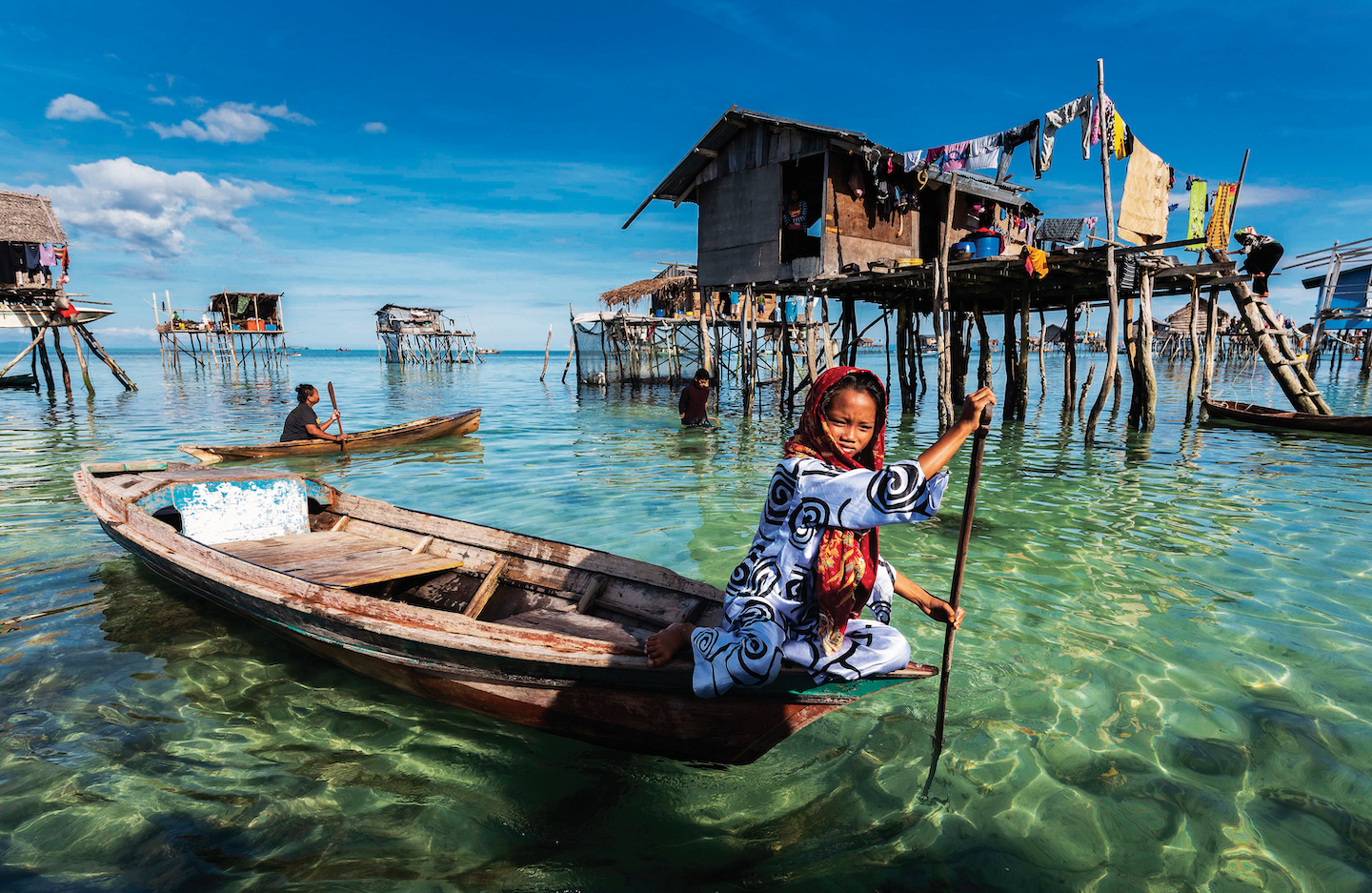
Some people are born to the land. The Bajau? They were born to the ocean. With lungs that defy logic, boats that serve as homes, and eyes trained on the dance of waves, the Bajau are the ocean’s most intimate companions. But who are these sea nomads that glide silently through the waters of East Africa and beyond?
Living Without Land: The Floating World of the Bajau
Long before maps marked borders, the Bajau roamed the seas. Traditionally boat-dwellers, they lived in long, hand-carved wooden vessels that housed entire families floating from shore to shore in search of fish and calm waters. Though originally rooted in Southeast Asia, centuries of maritime movement brought some of them to the coasts of East Africa, especially around Madagascar and Tanzania, where their presence adds to the cultural richness of coastal communities.
Born Divers: Humans with Fish-Like Abilities
Scientists have been stunned by the Bajau’s biology. Some can hold their breath for over 13 minutes and dive more than 70 meters deep, without any equipment. It’s not magic, their spleens are physically larger than average, an adaptation that boosts oxygen flow. To the Bajau, this isn’t extraordinary; it’s simply life.
Oceanic Oracles: Navigating Without Compass or Map
The Bajau navigate the seas the way others walk familiar streets. They read the ripple of the water, the movement of the birds, the shimmer of the stars, and the whisper of the wind. No GPS. No maps. Just memory, intuition, and centuries of knowledge passed down by word of mouth.
Language That Rides the Waves
Their language is melodic, filled with dialects influenced by Austronesian, Swahili, and Arabic tongues, a reminder of the Bajau’s deep entanglement in the maritime trade that connected Asia and East Africa for hundreds of years. Their speech, like the sea, is fluid and adaptive.
A People Without Borders
The modern world hasn’t been kind to the Bajau. Stateless in many countries, they drift between national identities, often without passports or legal recognition. Yet their resilience lies in this very detachment, their freedom is in their movement. Their loyalty belongs not to governments, but to the sea.
Rituals of the Deep: Faith Beneath the Surface
While many Bajau communities practice Islam, their spiritual world is laced with ancient beliefs. They honor sea spirits, perform cleansing rituals before long voyages, and believe that the ocean listens. To disrespect the sea, they say, is to invite misfortune.
The Women of the Water
Bajau women are vibrant storytellers of their culture. With delicate tattoos etched across their faces, adorned in bright, hand-woven garments, they sing, teach, and pass down rituals. Their role in preserving oral history and spiritual customs is as vital as their husbands’ dives beneath the waves.
The Fight to Stay Afloat
Today, the Bajau way of life is under threat. Overfishing, environmental degradation, forced assimilation, and displacement have pushed many inland, stripping them of their sea-bound identity. But efforts are rising: from cultural documentation and marine conservation to eco-tourism projects that shine a light on their quiet genius.
A Living Legacy of the Ocean
The Bajau are not just a tribe, they are a living legacy of humankind’s ancient relationship with the ocean. They are what remains of a world that moved by moonlight and current, not engines and compasses. In their silence, there is story. In their eyes, a depth few of us ever reach.

Leave a Reply