
Introduction
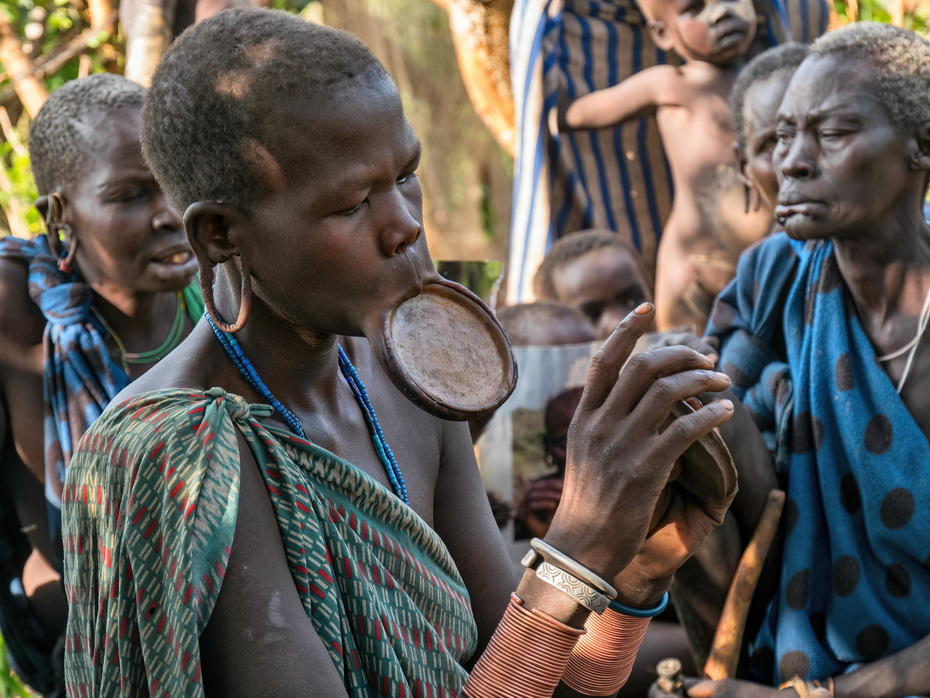
Hidden deep in the Omo Valley of southwestern Ethiopia, the Surma tribe also known as the Suri live with unmatched boldness, creativity, and strength. Famous for their elaborate lip plates, body scarification, and vibrant paint rituals, the Surma people wear their culture as living art. But beyond the visual spectacle lies a resilient society rooted in honor, nature, and tradition, where beauty is pain, and pride runs through every scar and dance.
Location
The Surma inhabit the remote, hilly regions of the SNNPR (Southern Nations, Nationalities, and Peoples’ Region) of Ethiopia, particularly near the borders with South Sudan. The Omo River basin is their homeland wild, fertile, and fiercely protected.
Demography
The Surma number about 45,000 people, spread across several small villages. The community includes three main groups: Chai, Timaga, and Baale, all of whom share similar customs and speak mutually intelligible dialects.
Linguistic Affiliation
They speak Suri, part of the Nilo-Saharan Surmic language family. Though isolated, many Surma are increasingly multilingual due to contact with neighboring tribes and government interactions.
History and Cultural Relations
The Surma have long resisted government control and external interference, preserving their autonomy and warrior traditions. While they have clashed with other groups like the Nyangatom and Toposa over land and cattle, they remain one of the most culturally distinct and self-reliant tribes in the region.
Settlements
Surma villages consist of thatched huts arranged in clusters, often surrounded by bush and pasture. They are semi-nomadic, moving with their herds as seasons change. Their settlements are structured around communal cooperation and livestock security.
Trade
The Surma economy revolves around cattle, which are used as currency, bride price, and status symbols. They also practice subsistence farming, growing sorghum, maize, and beans. Occasionally, they trade honey, animal products, and crafts with nearby groups.
Marriage
Marriage in Surma culture involves a bride price paid in cattle, and unions are arranged by family elders. Women are valued not just for beauty but also strength and fertility. The lip plate tradition where girls stretch their lower lips using clay disks is both a rite of passage and a mark of cultural identity.
Religion
The Surma follow a traditional animist belief system, worshiping natural forces, ancestral spirits, and protective deities. Rituals include sacrifices, rainmaking ceremonies, and spiritual dances. They hold deep respect for the earth, animals, and ancestors.
The Art of Relating with the Surma
The Surma are proud and independent, and outsiders must approach them with deep respect and cultural sensitivity. They value honesty, bravery, and tradition, and often express themselves through art, dance, and debate.
Photography and tourism must be done ethically and respectfully, often with the guidance of local cultural mediators.
Uniqueness
Lip Plates & Scarification: Surma women wear giant lip plates, sometimes up to 16 inches wide, as a symbol of beauty and cultural pride. Both men and women practice body scarification as marks of identity and bravery.
Stick Fighting (Donga): Surma men engage in ritual stick fighting competitions, not just as sport, but to win wives, honor, and status. These dramatic contests can be brutal and poetic at once.
Body Painting: They use natural pigments from ash, clay, and flowers to create temporary body art that shifts daily a living gallery on skin.
Conclusion
To meet the Surma is to encounter a tribe unafraid to stand out, scar up, and live out their heritage loud and proud. Their aesthetic traditions may shock the modern eye, but they speak of identity, power, and resilience. In every carved line and painted face, the Surma tell the world: We are here, we are proud, and we are unforgettable.

Leave a Reply