
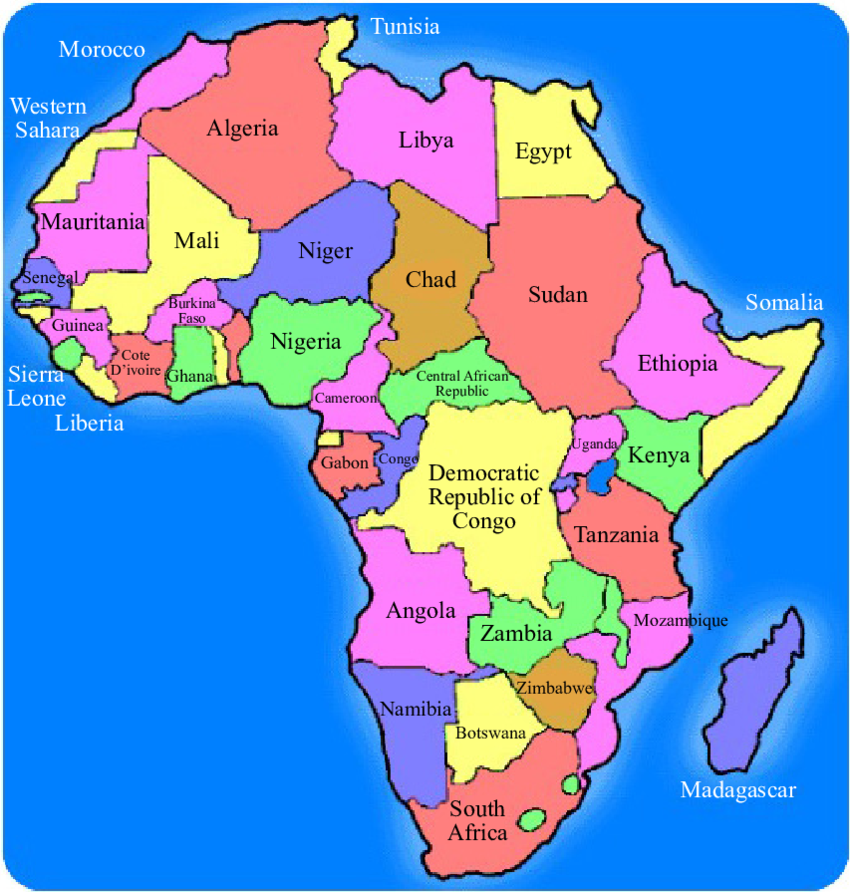
Africa, the second-largest continent in the world, is home to diverse cultures, languages, and landscapes. It is also one of the fastest-growing regions in terms of population, with several countries boasting large and youthful populations. Below is an overview of the top African countries by population, highlighting their unique attributes and significance.
1. Nigeria
Population: Over 230 million
Capital: Abuja
Key Facts:
Nigeria is the most populous country in Africa and the seventh most populous in the world. Known as the “Giant of Africa,” Nigeria is a powerhouse in economy, culture, and influence.

Its population is driven by a high birth rate and a large youth demographic, with over 60% of Nigerians under 25. The country is famous for its rich oil reserves, Nollywood (its film industry), and vibrant music scene, including Afrobeat.
2. Ethiopia
Population: Over 125 million
Capital: Addis Ababa
Key Facts:
Ethiopia, located in the Horn of Africa, is the second-most populous country on the continent. It is one of the oldest nations in the world, with a history dating back thousands of years.

The country has a rapidly growing population supported by a predominantly agrarian economy. Ethiopia is also a major political hub, housing the headquarters of the African Union.
3. Egypt
Population: Over 112 million
Capital: Cairo
Key Facts:
Egypt straddles North Africa and the Middle East, with a large population concentrated along the Nile River.

Renowned for its ancient civilisation and iconic landmarks such as the Pyramids and Sphinx, Egypt remains a critical player in African politics and economics. Its growing population is supported by urban expansion and industrialisation.
4. Democratic Republic of Congo (DRC)
Population: Over 100 million
Capital: Kinshasa
Key Facts:
The DRC is Africa’s second-largest country by land area and boasts abundant natural resources, including minerals such as cobalt and diamonds.

Despite its potential, the country faces political instability and infrastructure development challenges. Kinshasa, its capital, is one of the largest cities in Africa.
5. Tanzania
Population: Over 67 million
Capital: Dodoma
Key Facts:
Known for its wildlife and tourism attractions like Mount Kilimanjaro and Serengeti National Park, Tanzania has a rapidly growing population.

Agriculture is the backbone of the economy, and the country has invested heavily in education and health to manage its demographic growth.
6. South Africa
Population: Over 60 million
Capital: Pretoria (administrative), Cape Town (legislative), Bloemfontein (judicial)
Key Facts:
South Africa is one of the most industrialised countries in Africa, with a diverse economy that includes mining, manufacturing, and finance.

The country’s population growth is slower compared to others, and it has a mix of urbanised and rural communities. It remains a cultural and economic hub for the continent.
7. Kenya
Population: Over 55 million
Capital: Nairobi
Key Facts:
Kenya is known as East Africa’s economic hub, with a dynamic economy supported by agriculture, technology, and tourism.

The country is famous for its wildlife safaris and scenic landscapes. Kenya’s youthful population drives innovation, particularly in areas like mobile technology.
8. Uganda
Population: Over 48 million
Capital: Kampala
Key Facts:
Uganda’s population is one of the fastest-growing in Africa, with a median age of just 16 years.

The country has fertile lands and is a leading producer of coffee and tea. Efforts to improve healthcare and education are ongoing as Uganda manages its rapid population growth.
9. Algeria
Population: Over 45 million
Capital: Algiers
Key Facts:
Algeria has a relatively small population density as the largest country in Africa by land area.

The economy is heavily reliant on oil and gas exports. The government has focused on diversifying the economy and managing urbanisation recently.
10. Sudan
Population: Over 46 million
Capital: Khartoum
Key Facts:
Sudan has a predominantly rural population, with agriculture and livestock forming the backbone of the economy.

Despite political instability, the country’s population grows, particularly in urban areas like Khartoum.
Conclusion
Africa’s population dynamics highlight the continent’s potential as a global powerhouse. With a young and rapidly growing population, these countries are poised for significant socio-economic transformation. However, they also face unemployment, infrastructure deficits, and political instability. Strategic investments in education, healthcare, and technology will be key to harnessing Africa’s demographic dividend for sustainable growth.
Leave a Reply