
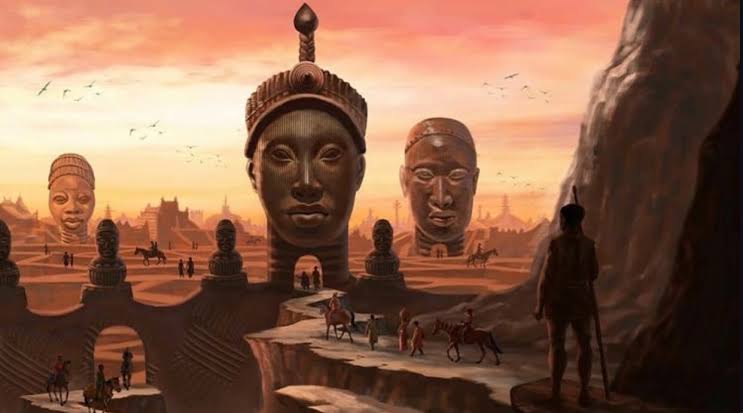
Africa, the cradle of humanity, has been home to some of the most powerful and influential empires in history. These empires not only shaped the continent’s history but also had profound impacts on global trade, culture, and politics. Here are some of the most powerful African empires and their legacies:
1. The Egyptian Empire (c. 3100 BCE – 30 BCE)
Ancient Egypt is one of the world’s most famous civilisations. Located in northeastern Africa along the fertile Nile River, it is known for its monumental architecture, such as the pyramids of Giza and the Great Sphinx. Egypt was a hub of cultural, scientific, and political innovation.

The empire’s pharaohs ruled with divine authority, and its influence extended to neighbouring regions in the Middle East and Mediterranean. Egyptian advancements in mathematics, medicine, and astronomy continue to fascinate historians today.
2. The Kingdom of Kush (c. 1070 BCE – 350 CE)
The Kingdom of Kush, located south of Egypt in what is now Sudan, was a major rival and trading partner of its northern neighbour.

Known for its capital city, Meroë, Kushites excelled in ironworking, architecture, and the arts. They also ruled over Egypt during the 25th Dynasty, earning the title of the “Black Pharaohs.” Kush’s culture blended Egyptian influences with unique African traditions, creating a distinct legacy.
3. The Carthaginian Empire (c. 814 BCE – 146 BCE)
Founded by the Phoenicians in modern-day Tunisia, Carthage became a dominant maritime power in the Mediterranean.

Carthage was an economic powerhouse known for its formidable navy and trade networks. The empire’s most famous leader, Hannibal Barca, led a daring military campaign against Rome during the Second Punic War, cementing Carthage’s place in history. Despite its eventual destruction by Rome, Carthage left a lasting legacy in maritime trade and urban planning.
4. The Kingdom of Aksum (c. 100 CE – 940 CE)
Situated in modern-day Ethiopia and Eritrea, Aksum was a powerful trading empire that connected Africa, the Middle East, and Asia.

Its control over the Red Sea trade routes brought immense wealth and influence. Aksum was one of the first major empires to adopt Christianity as its official religion, leaving a lasting impact on Ethiopian culture. The empire is also celebrated for its architectural achievements, such as the towering stelae and the ruins of ancient palaces.
5. The Ghana Empire (c. 300 CE – 1200 CE)
The Ghana Empire, located in present-day Mali and Mauritania, was one of West Africa’s first major empires. Known as the “Land of Gold,” Ghana’s wealth was derived from its vast gold reserves and control over trans-Saharan trade routes.

The empire’s capital, Kumbi Saleh, was a bustling centre of commerce and culture, attracting traders from across Africa and beyond.
6. The Mali Empire (c. 1235 CE – 1600 CE)
Rising from the remnants of the Ghana Empire, the Mali Empire became one of Africa’s wealthiest and most influential states. Under the leadership of Mansa Musa, often regarded as the richest man in history, Mail expanded its territory and influence.

Timbuktu, a city within the empire, became a learning centre, housing prestigious universities and libraries. Mansa Musa’s famous pilgrimage to Mecca showcased Mali’s wealth to the world.
7. The Songhai Empire (c. 1430 CE – 1591 CE)
The Songhai Empire succeeded Mali as the dominant power in West Africa. Its capital, Gao, and the city of Timbuktu were important centres of trade, scholarship, and Islamic culture. Under leaders like Sonni Ali and Askia Muhammad, Songhai controlled vast territories and managed a sophisticated administrative system. The empire’s decline came after the Moroccan invasion in 1591.
8. The Kingdom of Kongo (c. 1390 CE – 1857 CE)
Located in Central Africa, the Kingdom of Kongo was a thriving state known for its structured governance and vibrant trade networks. The kingdom engaged in trade with European powers, exchanging goods such as ivory and copper for textiles and other items. Christianity became a significant influence in Kongo after its rulers converted in the 15th century, blending with local traditions.
9. The Zulu Kingdom (1816 CE – 1897 CE)
The Zulu Kingdom, established by King Shaka, was a militaristic state in southern Africa.

Shaka’s revolutionary military tactics and disciplined army transformed the Zulu into a dominant force. The kingdom resisted colonial encroachment for decades, famously defeating British forces at the Battle of Isandlwana in 1879. Despite its eventual defeat, the Zulu Kingdom symbolises African resilience and pride.
Conclusion
These empires demonstrate the richness and diversity of Africa’s history. They were centres of innovation, culture, and economic power that left indelible marks on the world. Understanding these empires allows us to appreciate Africa’s immense contributions to global civilisation.
Leave a Reply