
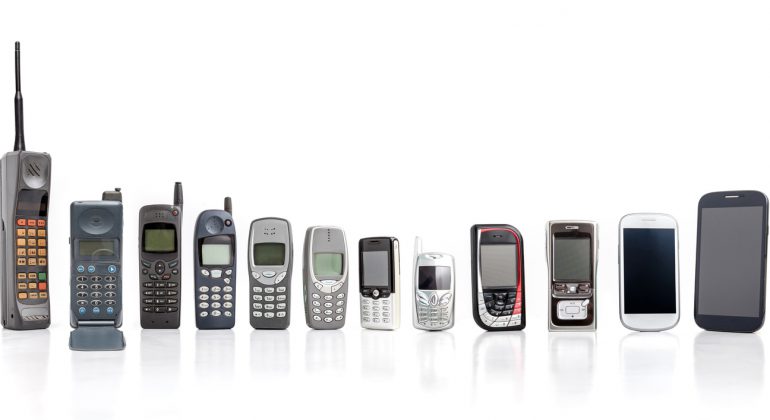
Wireless telephony can be traced back to the late 19th century when inventors like Nikola Tesla and others experimented with wireless communication technologies. Motorola researcher Martin Cooper made the first practical mobile phone call on April 3, 1973, using a Motorola DynaTAC prototype, which weighed about 2.5 pounds and resembled a large brick.
However, the first generation of the telephone was introduced in the early 1980s, 1G mobile networks enabled voice calls but had limited coverage and low-quality analog signals. These phones were large and bulky, primarily used by business professionals. The 1990s saw the advent of 2G networks, which introduced digital technology, enabling SMS (Short Message Service) and data services alongside voice calls. Mobile phones became smaller and more affordable, leading to increased consumer adoption. 3G networks, introduced in the early 2000s, provided faster internet access, video calling capabilities, and enhanced multimedia services on mobile phones. This era marked significant advancements in mobile data transmission speeds.
Advancement of Mobile Phones
4G networks, rolled out in the late 2000s and early 2010s, revolutionised mobile communication with significantly faster data speeds, enabling seamless streaming, online gaming, and HD video calls. Smartphones became ubiquitous, integrating powerful computing capabilities with mobile connectivity.
The first generation – 5G, represents the current generation of mobile technology, offering even faster speeds, lower latency, and greater capacity for connecting devices. It promises advancements in IoT (Internet of Things), autonomous vehicles, and augmented reality, ushering in a new era of interconnected devices and services.
Technological Advancements of Mobile Phones
Miniaturisation: Mobile phones have evolved from bulky devices to slim, lightweight smartphones with expansive touchscreens and powerful processors.
Integration of Features: Modern smartphones combine telephony with cameras, GPS navigation, internet browsing, social media access, and many applications that enhance productivity and entertainment.
User Experience: Advances in user interface design, battery life, and accessibility features have made smartphones more intuitive and indispensable tools in daily life.
In summary, the development and advancement of mobile phones have been driven by continuous innovation in wireless technology, enabling increasingly sophisticated communication capabilities and reshaping how people connect, work, and live globally.

Leave a Reply