
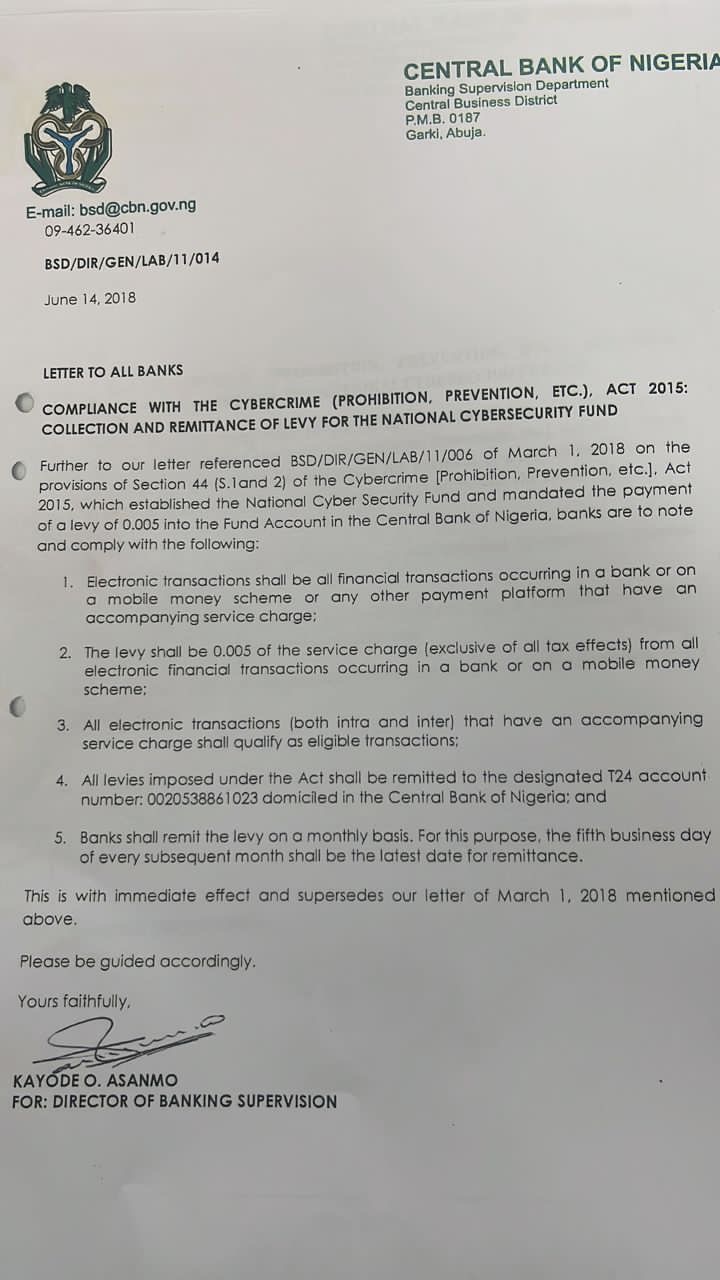
Nigeria’s Central Bank is set to enforce an updated version of the Cybersecurity Act of 2015 starting on May 20. This amended act will impose a 0.5% charge on all electronic transactions, marking a substantial increase of 900% from the previous levy of 0.005%.
This new implementation means that a ₦1,000 electronic transfer will now incur a ₦5 fee, while a ₦100,000 transfer will result in a ₦500 charge.
The cybersecurity tax will be imposed on top of current charges such as stamp duty and a ₦50 fee for electronic transactions of ₦10,000 or more in banks or financial institutions.
In two weeks, when the levy is implemented, there will be a limited number of exceptions including money transfers within the same bank, salary payments, school fees payments, and loan repayments. Financial experts believe that the new levy will impose hardships on individuals with low incomes who depend on electronic transactions for their daily needs.
According to the Nigeria Inter-Bank Settlement System (NIBSS), the value of electronic transactions in Nigeria increased by 66% to more than ₦600 trillion in 2023. The Cybersecurity Act was initially enacted in 2015, implementing a 0.005% tax on digital transactions.
In June 2018, a memo from the CBN instructed banks to gather the levy for electronic transactions made in a banking location or using a mobile money system or other payment platform that includes a service fee. In 2024, there were changes made to the Act, resulting in a 900% increase in the levy rate to 0.05%.
Additionally, the amendment extended the levy to include fintechs, payment service providers, and other financial institutions. “A financial industry expert, who preferred to remain anonymous, criticized the approach as regressive and suggested pushing for a law amendment instead. He emphasized the need for a cap on transactions.
” On May 3, the National Security Adviser, Nuhu Ribadu, urged for the enforced execution of the revised act, emphasizing the enhanced authority of the NSA. The cybersecurity fee will be paid regularly to the National Cybersecurity Fund (NCF), overseen by the NSA.
Last week, five financial technology companies were instructed by the NSA to cease signing up new customers and identified cryptocurrency as a matter of national security.
Leave a Reply