
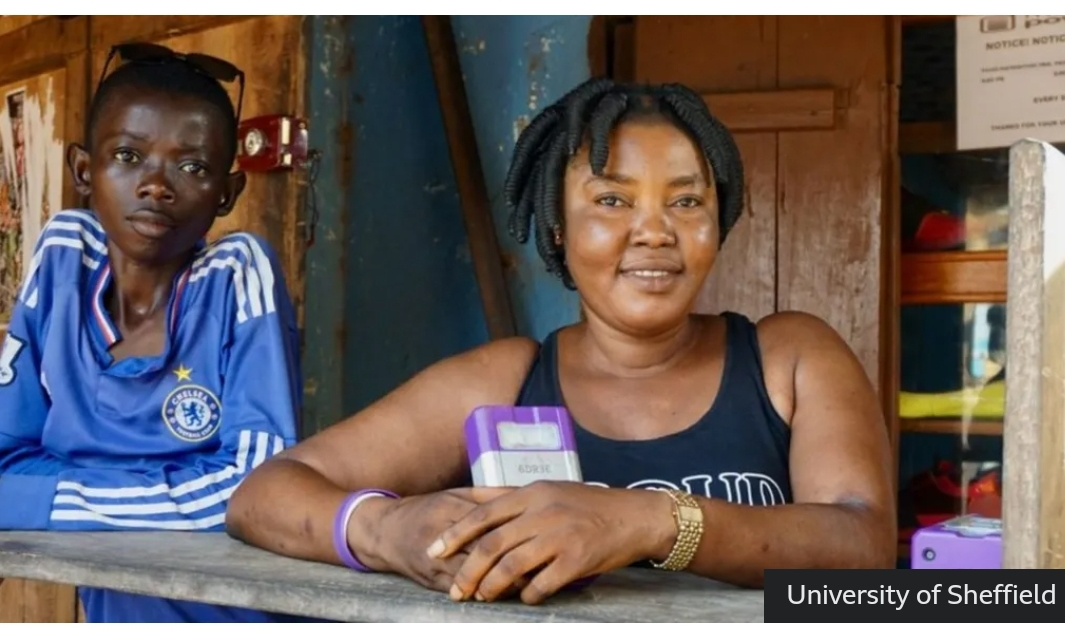
Engineers have been developing longer-life batteries to help communities in Africa.
The University of Sheffield said more than 740 million people around the world do not have access to electricity,
The MOPO batteries have been designed by Sheffield-based battery technology company Mobile Power.
They can provide power for appliances used for cooking, fridges, and charging mobile phones.
The batteries can help “connect communities to electricity,” the university said.
Dan Gladwin, professor of electronic and electrical engineering said: “More than 740 million people don’t have access to electricity around the world and for many off-grid communities or those with unstable power networks, the only reliable power sources potentially available are petrol and diesel generators.”
He said those were often expensive and could be “dangerous and damaging” to the environment. “Smart batteries can play a major role in helping to connect communities to electricity. They are clean and safe and can be much cheaper to access than petrol and diesel generators.”
People will be able to rent the batteries when needed through a cloud-based platform rental system, and they will be charged at solar powered hubs.
Engineers from the university have been working with the Mobile Power company since 2017 through sharing their skills in electrical engineering to help the company extend the lifetime of their battery cells.
More than 14 million MOPO battery rentals have already been made in Nigeria, Democratic Republic of the Congo, Sierra Leone, Liberia, Chad, and Uganda.
Leave a Reply