
Africa, the Cradle of Knowledge
When people think of ancient centers of learning, they often mention Athens, Cambridge, or perhaps Alexandria. But Africa was nurturing scholars, poets, jurists, and scientists long before most European universities opened their doors.
Far from being a “dark continent,” Africa was once home to flourishing academic institutions, vast libraries, and intellectual networks that stretched across deserts and seas. The continent was a hub of mathematics, medicine, astronomy, theology, literature, and law, its universities attracting students from as far as the Middle East, Asia, and Europe.
Let’s journey into the real academic legacy of Africa, exploring its ancient universities, some of which still stand today as proof that the African mind has always been rich in inquiry and wisdom.
- Timbuktu – Mali’s Beacon of Books
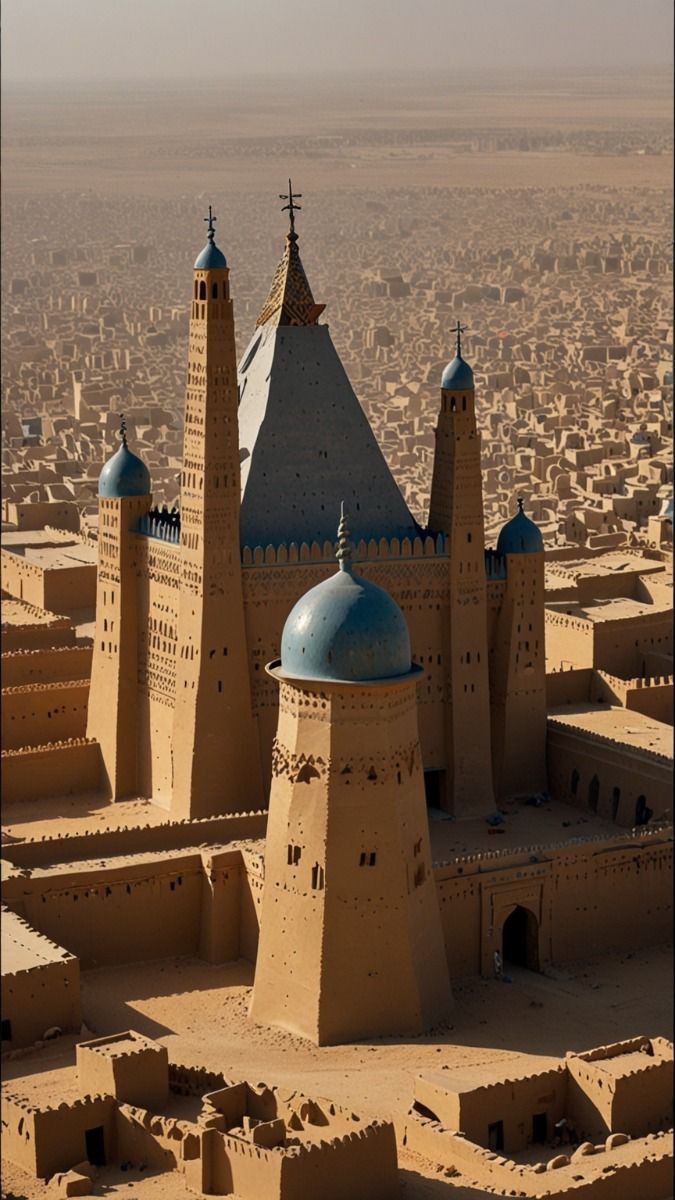
No mention of African scholarship is complete without Timbuktu, the legendary city of knowledge nestled in the sands of Mali. Flourishing during the 14th to 16th centuries, Timbuktu was more than a trade center, it was Africa’s intellectual crown jewel.
At its peak, Timbuktu hosted up to 25,000 students in a city of 100,000 people. It was home to three main universities:
Sankore
Jingaray Ber
Sidi Yahya
The most famous of them all, Sankore University, had a curriculum that covered:
Astronomy
Mathematics
Islamic law
Grammar
Medicine
Philosophy
Timbuktu was also known for its manuscript libraries, more than 700,000 ancient texts, many handwritten and passed down through generations. Subjects ranged from medicine to poetry, theology to geography.
Why it Matters?
Timbuktu proved that Africa had an advanced, well-organized, literate society centuries before the colonial era. It rivaled any global learning hub of its time.
- Al Quaraouiyine – The World’s Oldest Existing University (Morocco)
Founded in 859 CE by a remarkable woman named Fatima al-Fihri, Al Quaraouiyine University (also spelled Al-Karaouine) in Fez, Morocco is officially recognized by UNESCO and the Guinness World Records as the oldest existing and continually operating university in the world.
Originally starting as a mosque and religious school, it grew into a massive intellectual center that taught:
Mathematics
Astronomy
Medicine
Grammar
Logic
Theology
Its graduates included some of the most renowned thinkers in the Islamic world, including Ibn Khaldun and Maimonides, whose influence reached Spain, the Middle East, and beyond.
Why it Matters?
Al Quaraouiyine’s existence shatters the myth that African and Arab women didn’t contribute to education—and it showcases Morocco as a bridge between African, Arab, and European intellectualism.
- Al-Azhar University – Egypt’s Eternal Flame of Learning
Founded in 970 CE in Cairo, Al-Azhar University began as a center for Islamic theology, but quickly expanded to include:
Law
Grammar
Logic
Astronomy
Philosophy
Sciences
Al-Azhar produced some of the most respected scholars in Islamic history, and its influence stretched across Africa, Asia, and even into Europe during the Middle Ages.
Though not sub-Saharan, Egypt’s place in Africa and its massive contribution to learning earns Al-Azhar a rightful place in this list.
Why it Matters?
Al-Azhar has operated for over 1,000 years, making it not just an African treasure, but a pillar of global Islamic scholarship.
- The University of Gao – The Overlooked Legacy of Songhai
Overshadowed by Timbuktu, Gao, the capital of the powerful Songhai Empire, also hosted thriving educational institutions during the 15th and 16th centuries.
Though not as extensively documented, Gao was home to Islamic jurists, poets, and scholars, and its educational system was interlinked with Timbuktu. Students often studied religious sciences, mathematics, and astronomy under master scholars.
Why it Matters?
Gao reminds us that Timbuktu was not alone. West Africa had an entire ecosystem of academic excellence.
- The Zaytuna University – Tunisia’s North African Gem
Zaytuna University, founded in 737 CE in Tunis, is another African institution that predates many of Europe’s oldest universities. It began as a mosque and grew into a full-fledged university, covering fields such as:
Logic
Theology
Linguistics
Astronomy
Law
Zaytuna influenced both African and Andalusian scholars, acting as a bridge for knowledge between Africa and Islamic Spain.
Why it Matters?
It proves that North Africa was a cradle of formal education, long before colonizers set foot in the region.
What Made These Ancient African Universities Unique?
- Student Diversity
They attracted scholars from across Africa, the Middle East, and Europe regardless of tribe, region, or race. - Open-Air Learning
Many classes were held under trees or in mosque courtyards. Learning was communal, conversational, and deeply relational. - Spiritual + Scientific Balance
These institutions combined the sacred with the scientific. Astronomy coexisted with Quranic study. Medicine was taught alongside theology. - Rich Manuscript Cultures
Unlike the modern world where information is mostly digital, these universities cherished books. Manuscripts were written, preserved, and protected with extreme reverence.
The Tragic Decline and Colonial Disruption
The rise of European colonialism led to the disruption, destruction, or dismissal of these African intellectual traditions. Libraries were looted. Languages were suppressed. Local scholars were sidelined in favor of European curricula.
Many African students today grow up never hearing of Timbuktu or Fatima al-Fihri, a tragedy that robs the continent of its rightful pride.
But the legacy is not dead. Many of these universities are being restored, and the manuscripts of Timbuktu are being digitized and preserved for future generations.
Africa’s Intellectual Glory Was Never a Myth
Africa is not just the land of drums and deserts. It is also the land of libraries, logic, and legendary learning.
Long before the West caught up, Africa had already carved its name in the book of intellectual history. From the woman-founded halls of Al Quaraouiyine to the manuscript-rich city of Timbuktu, African knowledge helped shape the world.
It’s time we teach it, treasure it, and tell it boldly.
Leave a Reply