
Introduction
In Africa, a name is not just an identifier. It is a prophecy. A history. A spiritual code. A mirror of one’s destiny.
From the plains of East Africa to the rainforests of Central Africa, to the bustling towns of West Africa, naming ceremonies are revered as some of the most important events in a person’s life. They mark not only the birth of a child but the spiritual arrival of a soul into the world.
Unlike the Western notion of names as mere labels, African names are deeply intentional. They tell stories. They reflect circumstances. They carry hopes, warnings, or memories. In many cultures, you are what you are named.
This post takes you on a journey into the mystical and meaningful world of African naming traditions, an aspect of the culture that is powerful, symbolic, and often mysterious to outsiders.
The Ceremony: A Sacred Introduction to the World
Across the continent, naming ceremonies are held with care, song, and spirituality. Though the languages and customs vary, the essence remains the same: introducing a soul to the world with a name that speaks to their origin and purpose.
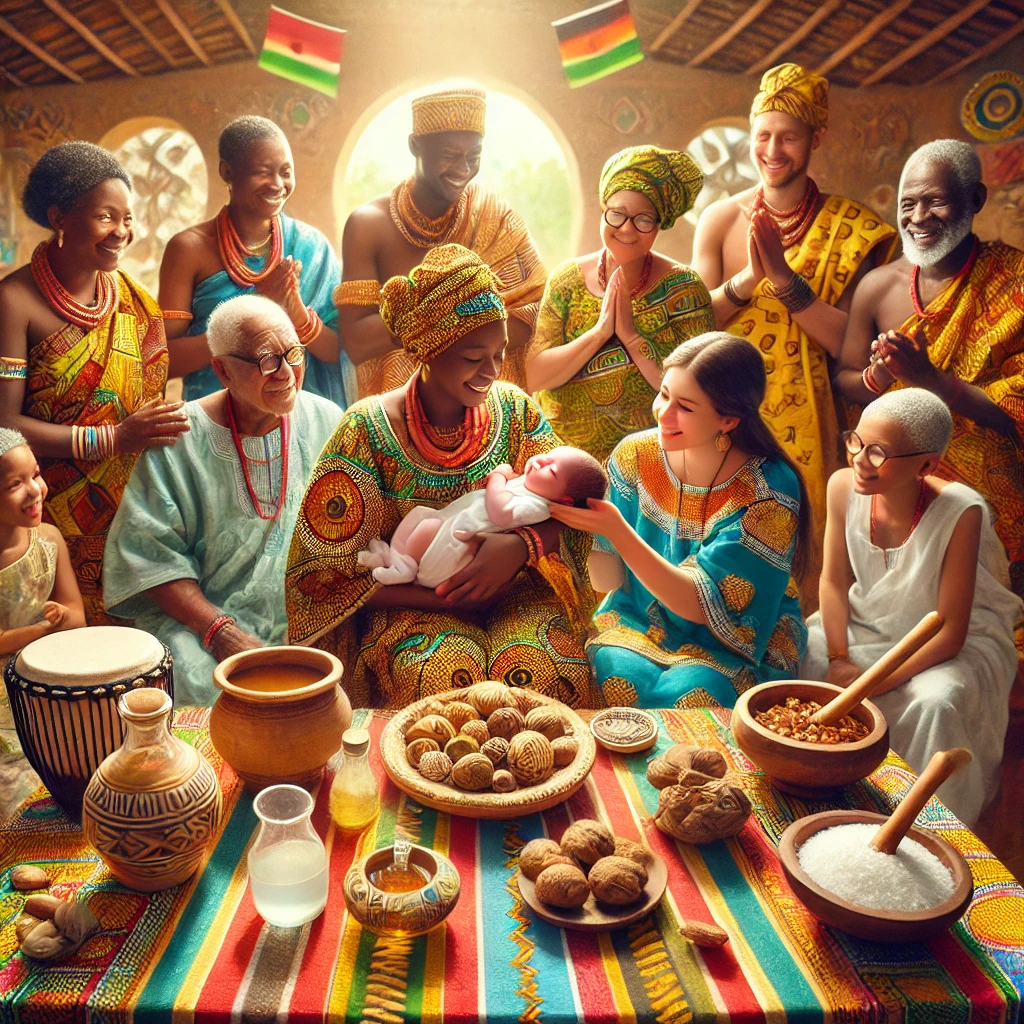
In many Nigerian Yoruba communities, the naming ceremony (called “Isomoloruko”) is held on the seventh day for girls and ninth day for boys. It is a joyful gathering where family elders, spiritual leaders, and well-wishers come together to pray over the child and speak blessings.
Names are not randomly chosen. The family considers:
📌The day of birth
📌The events surrounding the birth
📌The spiritual revelation (sometimes through dreams or divination)
📌The ancestral lineage
📌The mother or father’s experiences
A Name is a Sentence
In African cultures, names often tell entire stories. Take these for example:
📌Kwame (Ghana): Born on a Saturday
📌Yetunde (Nigeria): Mother has returned (refers to reincarnation of a grandmother)
📌Makena (Kenya): One who brings happiness
📌Thabisa (South Africa): One who brings joy
📌Chinonso (Nigeria, Igbo): God is near
📌Abeba (Ethiopia): Flower
These names are more than beautiful, they are affirmations, beliefs, ancestral echoes. Some children are named for protection, others to reflect resilience or divine guidance.
In some traditions, names are changed during life to reflect new roles or spiritual transformation.
Names as Protection
In certain African cultures, names are also used to shield children from evil or misfortune. If a family has experienced repeated infant mortality, a child may be given a name that is intentionally unattractive or odd to “fool the spirits” into thinking the child is unimportant and should be left alone.
Examples include:
📌Kokumo (Yoruba): “This one will not die again”
📌Ajaka (Yoruba): “One who came and will return again”
📌Nwaokike (Igbo): “A child born by divine arrangement”
These names reflect the cultural intersection of spiritual belief and survival wisdom.
Naming and Ancestral Connection
In Africa, naming is also a way of maintaining ancestral lineage. It is common for children to be named after a late grandparent or respected ancestor. In doing so, the family believes that the spirit of that ancestor will continue to live on in the child, guiding and protecting them.
This is why some cultures believe a name carries the spirit of the one who bore it before. The name is not just remembered, it is relived.
Community Participation
Naming ceremonies are usually communal. They often involve:
📌Prayers by elders or priests
📌Presentation of symbolic items: Water (purity), honey (sweetness), palm oil (health), salt (wisdom), kola nut (longevity), etc.
📌Singing and dancing
📌Public announcement of the name
📌Feasting
This communal act reinforces the African proverb: “It takes a village to raise a child.” The child belongs not just to the family, but to the community and to the ancestors.
Mystical Naming Practices
In some parts of Africa, names are not given by humans but by spiritual divination. Among the Ewe people of Ghana and Togo, traditional priests are consulted to find out which ancestral spirit has returned or what name the gods favor.
Among the Shona people of Zimbabwe, names are sometimes given based on dreams or visions experienced by the mother or elder family members during pregnancy.
Some names carry warnings or social critiques, such as:
📌Tichaona (Shona): “We have seen (life’s hardships)”
📌Esowe (Ewe): “Let them say what they like”
📌Onyekachi (Igbo): “Who is greater than God?”
Names, in these contexts, are like living messages passed from one generation to another.
Names and Identity Today
Even today, African names carry deep weight. Though many Africans now have English or Arabic names due to colonial or religious influences, traditional names remain symbols of identity and pride.
In recent times, there has been a cultural reawakening. Many young Africans are reclaiming their traditional names, wearing them boldly in schools, workplaces, and on international stages. Because a name is not just a word. It is a connection to who you are and where you come from.
Speak My Name with Meaning
To understand African names is to understand African life itself, complex, spiritual, rooted in history, and rich in symbolism. A name is not chosen on a whim. It is chosen with the belief that words create reality.
So, when an African elder tells you their name, listen carefully. You may be hearing a story, a prayer, a prophecy, and a legacy all in one breath.
The next time you meet someone from Africa, don’t just ask “what’s your name?” Ask, “what does your name mean?”
You may just unlock a window into their soul.
Have you ever been to an African naming ceremony or do you know the meaning of your African name? Share it with us in the comments. Let’s celebrate our identity together!

Leave a Reply