
Introduction
Africa is a continent where culture is not just practiced, it is lived, breathed, and carried from generation to generation in ways that are both seen and unseen, heard and felt. While much of the world is captivated by African fashion, dance, and cuisine, there are deeper, more mysterious layers of African identity that remain hidden in plain sight. One of these is the ancient, almost magical instrument known as the talking drum.
Far beyond its rhythm and sound, the talking drum holds secrets, secrets of language, history, and communication that predate modern technology. In many ways, it was Africa’s first telephone, capable of sending messages across forests, mountains, and rivers. But even more intriguing is this: not everyone could understand it. It was, and still is, a language of its own, a sacred code shared only by those initiated into its rhythm.
This is not just a drum. This is the voice of a people. A mysterious messenger that continues to echo the soul of Africa.
The Drum That Talks _ Literally
Imagine standing at the edge of a forest in a Yoruba village in Nigeria, or a compound in Ghana, and hearing what seems to be a random pattern of beats echoing through the trees. But the villagers around you pause, nod, and suddenly begin moving, some in joy, others in preparation. What you just heard wasn’t a song. It was a message. It was the talking drum speaking.
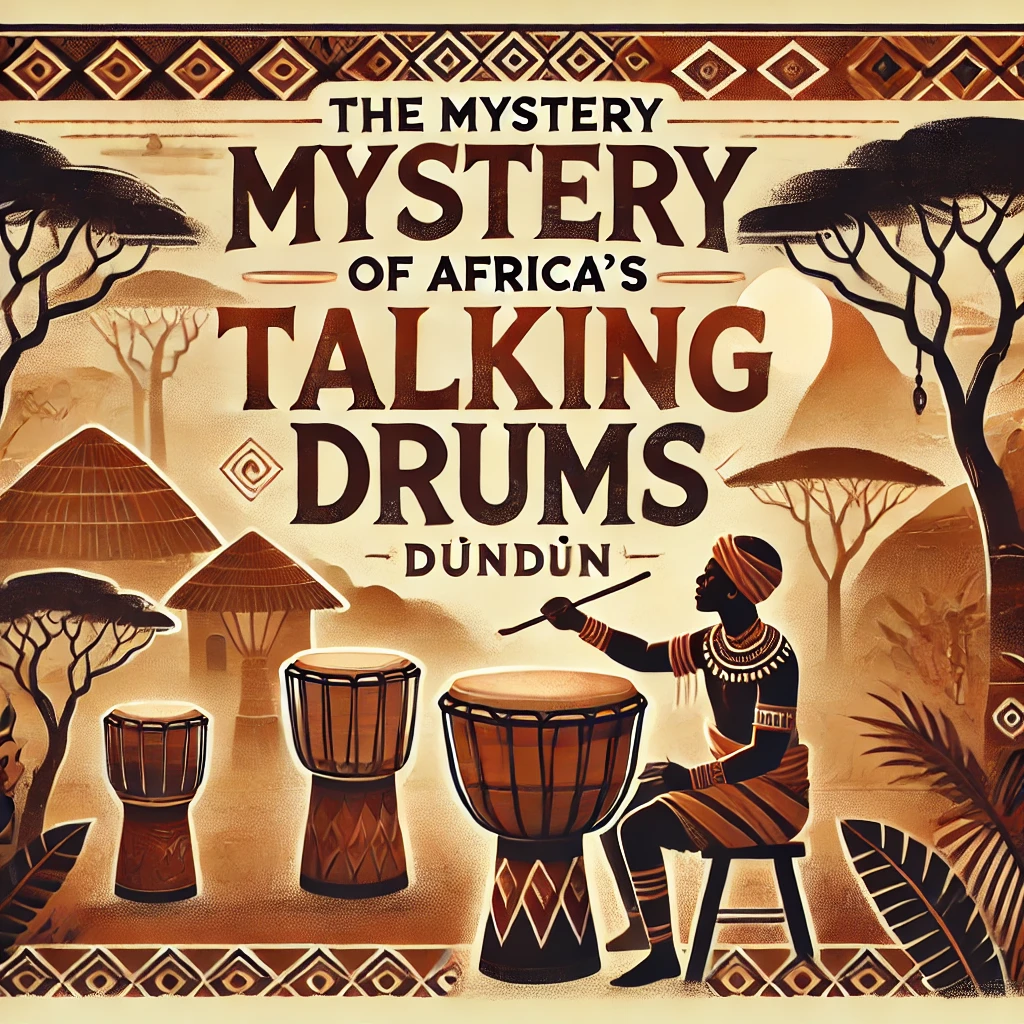
The African talking drum, known by various names across the continent (like dùndún in Yoruba land), is specially crafted to mimic the pitch and tone of human speech. Shaped like an hourglass and held under the arm, it is played with a curved stick while the player tightens and loosens the drum’s cords. This changes the pitch, allowing the drum to “speak” in the tonal language of its people.
In Africa, many languages are tonal, meaning a single word can have different meanings based on the pitch or tone used. The talking drum takes advantage of this to replicate words, proverbs, and even full conversations. It is truly sound transformed into speech.
Africa’s Ancient Messaging System
Before phones, radios, and emails, how did people communicate across distant villages? How were announcements made, dangers signaled, or events shared? The answer, in many communities, was the talking drum.
Messages could be sent over long distances by drummers positioned at intervals. Each drummer would receive the message and relay it forward. Through this system, news could travel miles in minutes. Whether announcing the birth of a child, the death of a king, or the approach of an enemy, the talking drum played the role of both reporter and messenger.
In many cases, the messages were encoded in proverbs or symbolic expressions. For example, rather than saying “the king is dead,” the drum might say, “the elephant has fallen in the forest.” Only those familiar with the culture would understand the deeper meaning.
The Hidden Wisdom Behind the Beat
One of the most mysterious aspects of the talking drum is that not everyone can hear its true message. To the untrained ear, it may sound like random beats or music. But to elders, traditionalists, or trained drummers, it is a fully formed message. This makes it a hidden language, an oral archive, and a protected code of communication.
In many African cultures, drummers are not just musicians, they are custodians of history and tradition. They are trained from childhood to understand the linguistic patterns of the drum, the messages embedded in proverbs, and the rhythm of ceremonies.
This is where the mystery lies: in the ability to store wisdom and culture within the beat of an instrument. It is African ingenuity at its finest, a combination of art, science, and culture.
The Drum in Ceremonies and Celebrations
The talking drum is not just used for messages, it is also central to African ceremonies. At weddings, it tells of love and union. At funerals, it mourns the dead with poetic rhythm. At naming ceremonies, it celebrates new life with joyful beats.
In some royal courts, drummers stand beside kings, announcing their arrival with rhythm and praises. These drums are used to sing the names of ancestors, tell historical tales, and connect the living with the spiritual world.
When the drum speaks, it is as if the past and present are having a conversation. It’s no surprise that in many communities, the talking drum is regarded as sacred.
A Culture Almost Lost… But Not Forgotten
In today’s fast-paced world dominated by smartphones and loudspeakers, one may wonder if the talking drum still holds relevance. The answer is yes, but with caution. While many young Africans are unfamiliar with this tradition, there is a growing effort to revive and preserve it.
Festivals, cultural schools, and traditional leaders are encouraging younger generations to learn the drum, not just to play music but to understand the language of their ancestors. For those who listen closely, the talking drum still has stories to tell.
It is more than nostalgia, it is a reminder of who we are.
When Culture Has a Voice
The African talking drum is not just a relic of the past, it is a powerful example of how culture, when rooted deeply, becomes a living, speaking thing. It shows that communication does not always need wires or screens. Sometimes, all it needs is rhythm, knowledge, and intent.
The mystery of the talking drum is not just in how it speaks, but in what it says about the people who created it: wise, communal, artistic, and deeply connected to their language and land.
So, the next time you hear an African drumbeat, pause and listen more closely. It might just be saying something to you, something only your heart can understand.
Have you ever witnessed the African talking drum in action? Share your experience or thoughts in the comments! Let’s keep the culture alive, one beat at a time.


Leave a Reply