
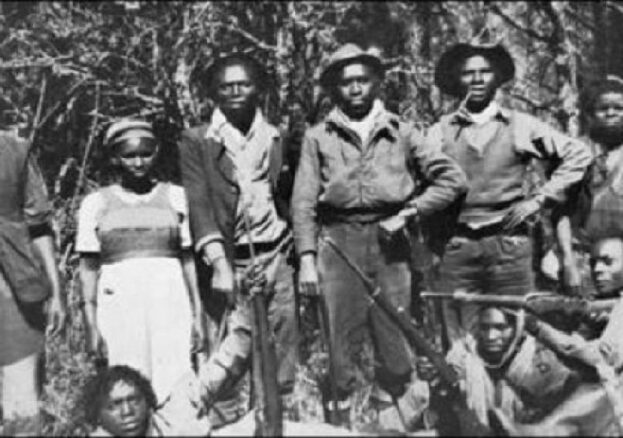
The Mau Mau movement was a nationalist, anti-colonial rebellion in Kenya during the 1950s. Primarily led by the Kikuyu people, it also included members of other Kenyan ethnic groups. All were united in opposition to British colonial rule and the seizure of their lands.
The rebellion was a response to decades of British colonial oppression and land-grabbing policies, particularly by British settlers. The Kikuyu people had been displaced from their ancestral lands and forced into low-wage labour on European-owned farms, leading to widespread poverty and social discontent.
Initially formed as a secret society in the early 1950s, the Mau Mau movement soon transformed into an armed resistance. Using guerrilla tactics, they launched attacks on British authorities, European settlers, and Kenyan Africans perceived as collaborators with the colonial regime.
The British responded with a harsh counter-insurgency campaign, including torture, detention without trial, and executions. They also implemented a policy of “villagisation,” forcibly relocating Kikuyu people into guarded camps to suppress the movement.
The brutal treatment of the Mau Mau has led to ongoing legal claims for compensation. In recent years, the British government agreed to pay £19.9 million to over 5,000 elderly Kenyans who had endured torture and abuse during the uprising. Two of those receiving compensation were women, with additional cases pending for female claimants.
From 1954 to 1960, the British detained around 8,000 women under emergency powers designed to crush the Mau Mau rebellion. Most were held in Kamiti Detention Camp, but recently uncovered documents from the Hanslope Park Archive reveal the existence of a second women’s camp at Gitamayu, established in 1958 to manage the remaining “hardcore” female detainees.
In contrast, more is known about the male detainees, who have written numerous memoirs and been the focus of extensive research. Prominent figures like Jomo Kenyatta and J.M. Kariuki are well-known, as are camps such as Manyani, Athi River, and Hola, which became notorious sites of resistance and brutality. Historian David Anderson’s research has detailed how British policies toward hardcore male detainees grew more severe from 1957 onward.
The Mau Mau rebellion officially ended in 1960, following a state of emergency and the arrests of most Mau Mau leaders. However, the movement left a lasting legacy in Kenya’s fight for independence, achieved in 1963. It also inspired other anti-colonial struggles across Africa.
Leave a Reply