
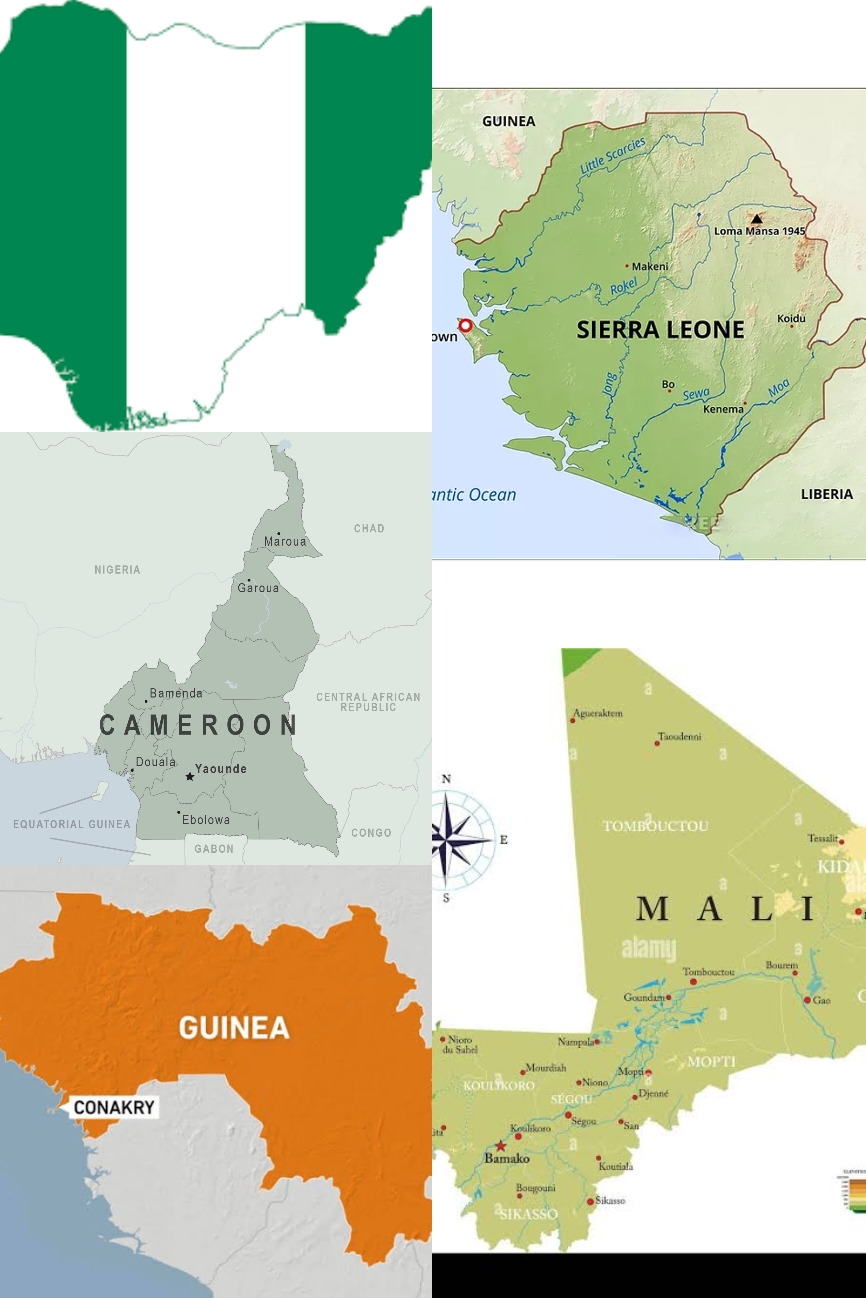
As Africa gained independence from colonial rule, many countries shed their imposed names, embracing new identities rooted in their rich cultural heritage. However, some nations retained the names given to them by their colonial powers. This article explores five African countries that still bear the names assigned during the colonial era, examining the origins and significance of these names and their enduring impact on national identity.
1. Nigeria

The name Nigeria originates from the Niger River, which flows through the country. It was first used on January 8, 1897, by British journalist Flora Shaw. The neighboring Republic of Niger also takes its name from this river. Nigeria gained partial self-governance in 1954 and achieved full independence from the United Kingdom on October 1, 1960, as the Federation of Nigeria. Abubakar Tafawa Balewa became the country’s first Prime Minister, while Queen Elizabeth II remained the ceremonial head of state as Queen of Nigeria.
2. Mali

Mali, formerly under French colonial rule, was known as Soudan Français (French Sudan). Although the territory came under French control in 1892, local resistance persisted until the region was fully subdued by 1905. In 1958, the Sudanese Republic, as it was then called, gained autonomy and joined the French Community. In 1959, it united with Senegal to form the Federation of Mali. On June 20, 1960, the Federation of Mali became an independent nation, with Modibo Keïta as its first president.
3. Sierra Leone

The name Sierra Leone was given by Portuguese explorer Pedro de Sintra in the 15th century, who called the area “Serra Lyoa” (meaning “Lion Mountains”) after the hills surrounding Freetown harbor. Sierra Leone gained independence from British rule on April 27, 1961. In 1962, the Sierra Leone People’s Party (SLPP) won the general elections, with the All People’s Congress (APC) as the main opposition.
4. Guinea

Guinea achieved independence from France on October 2, 1958, following a referendum that rejected association with the French Fifth Republic. Ahmed Sékou Touré, a prominent leader, became the country’s first president. The name Guinea, which originates from the Portuguese word “Guiné,” referred to regions inhabited by Africans south of the Senegal River. In 1978, Guinea’s official name was changed to the People’s Revolutionary Republic of Guinea, and following Sékou Touré’s death in 1984, it was renamed the Republic of Guinea.
5. Cameroon

Cameroon’s name comes from the Portuguese “Rio dos Camarões” (River of Prawns), named by Portuguese explorers in the 15th century for the shrimp found in the Wouri River. This name evolved into “Cameroon” under British and French colonial rule. Cameroon became a German colony, Kamerun, in 1884, and after World War I, the territory was divided between France and the UK under League of Nations mandates. Cameroon gained independence from France in 1960 and from the UK in 1961.
These countries, though independent, kept the names assigned during colonial rule, which have since become integral to their national identities.
Leave a Reply