
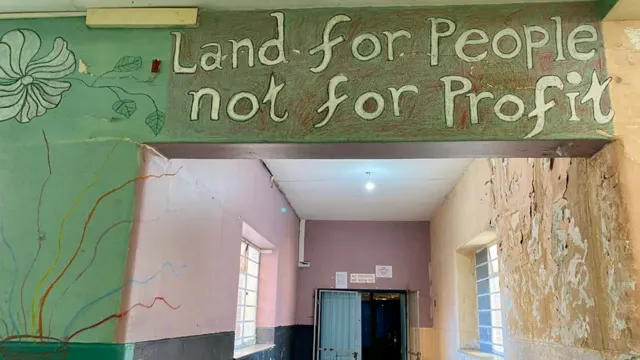
In Cape Town, South Africa, a group of activists has occupied a derelict hospital, protesting the government’s failure to provide affordable housing. Despite the end of apartheid, enduring inequality persists, and the housing policies of the governing African National Congress (ANC) have inadvertently reinforced the geography of apartheid.
The occupants, part of the Reclaim the City movement, took over the Woodstock Hospital seven years ago, seeking to reclaim property close to the city center. Bevil Lucas, a leader, explains that access to jobs and services is key to addressing segregation. “A new form of economic apartheid” has replaced racist laws, trapping black and colored people in poverty on the city’s periphery.
Jameelah Davids, a mother of an autistic son, settled her family in the former hospital morgue office, citing the importance of location. Faldilah Petersen transformed a hospital bathroom into a home, having been evicted multiple times before. Both women have been waiting for government housing for nearly 30 years.

The ANC has built over three million homes since taking power, but most are far from city centers, perpetuating apartheid’s spatial planning and inequalities. Cape Town is “probably the most segregated urban area anywhere on Earth,” says urban policy researcher Nick Budlender.
The city authorities consider the occupants illegal and want them to leave before development begins. However, the Reclaim the City movement sees their occupation as a protest against the government’s failure to deliver affordable housing and address enduring inequality. As South Africa approaches its seventh democratic election, the struggle for economic equality and spatial justice continues.
Leave a Reply